

Earlier in this series we followed tree roots beneath the forest floor and traced water as it moved through cloud, river and body. Each time we arrived at the same quiet thought from a different direction: nothing we met there ended at its own edge. A birch can feed a fir through fungal threads it will never see (Simard, 2021), and the water in a morning cup of tea has passed through countless other lives before reaching ours. This post brings those threads together and names the idea that has been sitting beneath them all along.
Existential Diversity
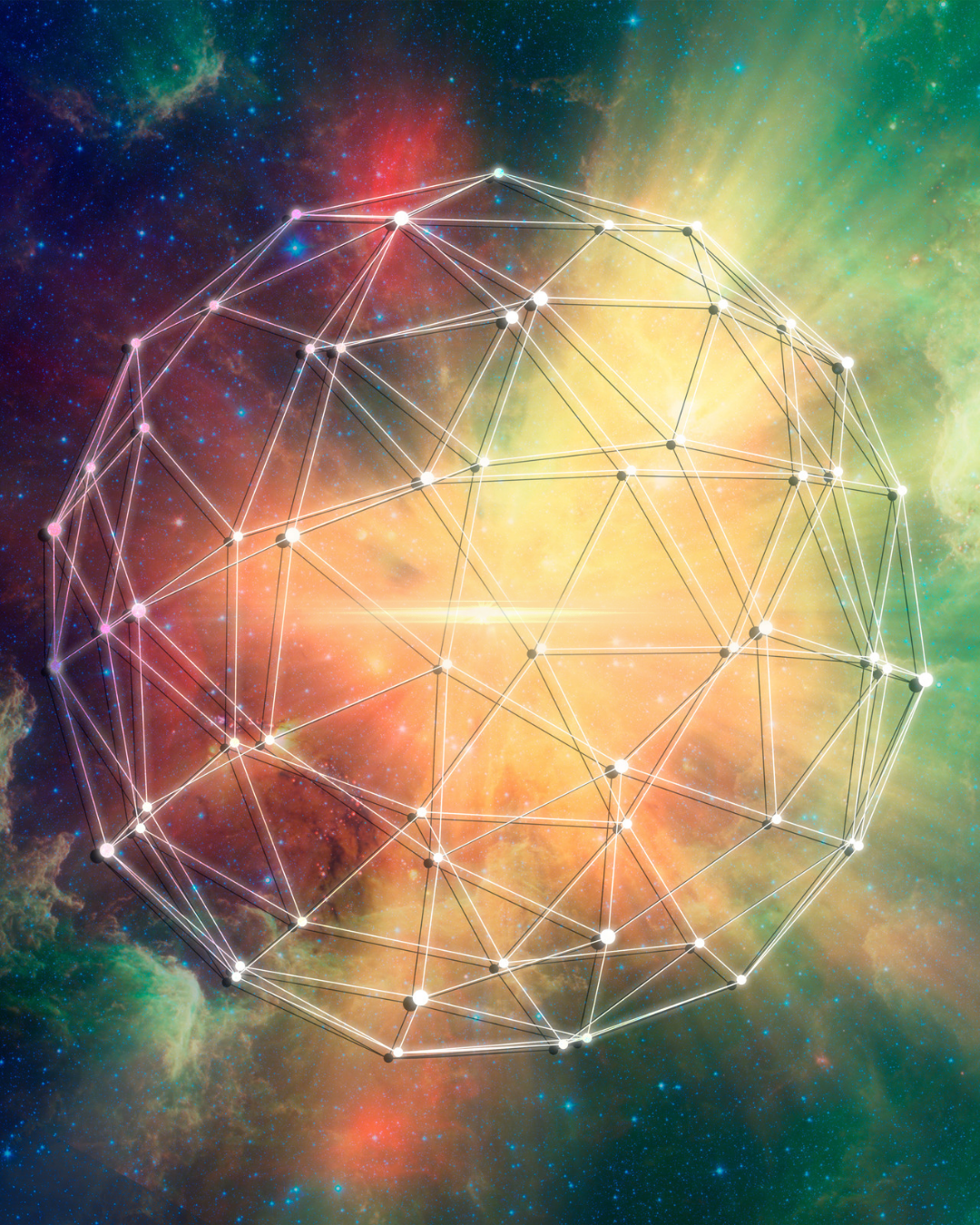
We call it existential diversity. Existential diversity is the acknowledgement that our bodyminds extend beyond our physical limits. Our cognition, embodiment, and overall existence influence the world around us in as many ways as there are living and non-living entities, and the world influences us in return. That return matters a great deal. A river shapes its valley while the valley shapes the river, and a person who walks the same path each day changes that place a little, just as the place slowly changes them.
Donna Haraway (2016) uses the word sympoiesis, or making-with, to describe how no living thing makes itself alone. Existential diversity carries that thought a step further. If every bodymind is made with others in this way, then the ways each of us reaches into the world will differ as widely as bodyminds themselves do. Some people feel that reach faintly, as a background hum they rarely notice. Others feel it so intensely that it can be beautiful and overwhelming at the same time.
Symphrenia
That second group is where symphrenia lives. Symphrenia is the neurodivergent experience of having a connected, extended bodymind. It grew from the meeting point of AuDHD and psychotic experiences, though we do not limit who may use it. Many Autistic and ADHD people already know how monotropic attention draws us deep into whatever holds our interest (Murray et al., 2005). When that depth turns towards the living world, connection can stop feeling like a metaphor and start feeling like the plain truth of things.
Symphrenic people feel connections with people, creatures, places and things with unusual depth, sometimes more than they can hold. That overflow can lead to hallucinations, and to thoughts perceived as located somewhere beyond this reality. We use the words “more than they can hold” with great care. Symphrenia offers no romantic picture of madness, and nobody is asked to celebrate experiences that frighten them. What we hope to shift is the starting point. The clinical story begins with a mind that has broken apart, while ours begins with a mind so connected that the connections sometimes flood, merge and mingle.
That shift can change how people are met when life becomes hard. A person whose experience is understood as an overflowing connection might be offered grounding, rest, and trusted company, alongside any clinical support they choose, rather than being told their perceptions carry no meaning at all or that they need a cure. Walker (2021) describes neuroqueering as a refusal to perform normativity and a making of room for other ways of being, and we see symphrenia as one small part of that work.
Finally, symphrenia is an identity that a person can only choose for themselves, without assessment or criteria. It is often experienced as a psychosis, yet nobody can be diagnosed as symphrenic, as it is a word we have made up to describe our own experiences, which also means nobody can be refused the word; if you resonate with us, you can have this word too to help explain your experiences. We would rather leave the door open and trust each person to know whether this is a place where they belong. Like the roots and the rivers, the word is there to be shared. We hope it is helpful for some people; we have had wonderful feedback so far and are so grateful, feeling less alone!
Community matters; please follow, like and share our posts.
References
Haraway, D. J. (2016). Staying with the trouble: Making kin in the Chthulucene. Duke University Press.
Murray, D., Lesser, M., & Lawson, W. (2005). Attention, monotropism and the diagnostic criteria for autism. Autism, 9(2), 139–156. https://doi.org/10.1177/1362361305051398
Simard, S. (2021). Finding the mother tree: Discovering the wisdom of the forest. Allen Lane.
Walker, N. (2021). Neuroqueer heresies: Notes on the neurodiversity paradigm, Autistic empowerment, and postnormal possibilities. Autonomous Press.