

Real, Unreal, and Everything In Between
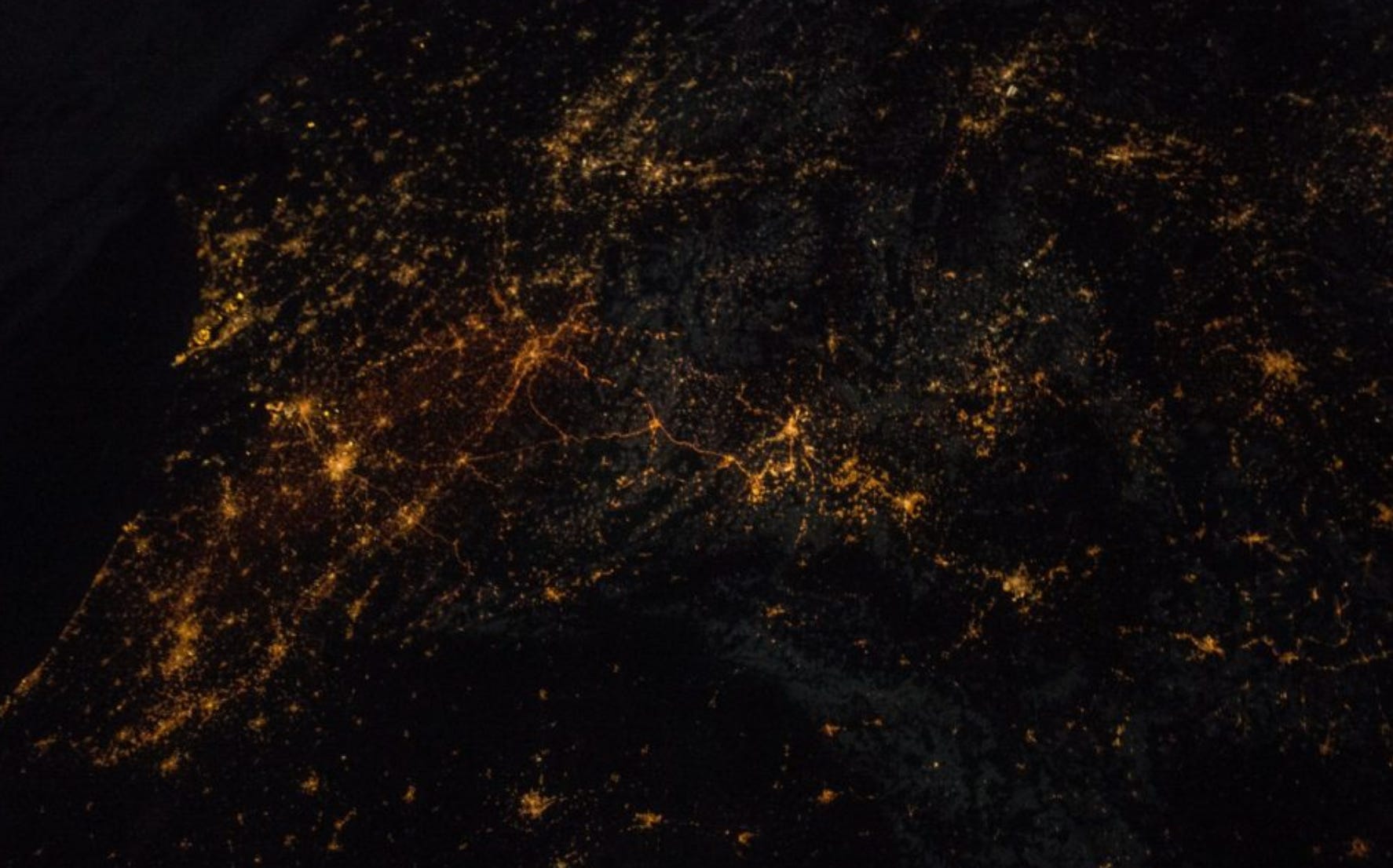
By Helen Edgar
Last night I went to see Professor Brian Cox’s live show, Emergence, and I came home with my head spinning, in a good way! The show explores how intricate beauty, from what seem like simple things like snowflakes, connects to wider ecosystems, the human brain and the vast cosmic web of galaxies, and emerges from a handful of simple (?!) laws of nature (Cox, 2026). Somewhere between Kepler’s snowflake and the edge of the observable universe, I found myself thinking about space, time and what might lie beyond them. I also found myself returning to a word that has been sitting with me for a while in relation to symphrenia: hallucination.
Once something is labelled a hallucination, it tends to be dismissed, tried to be managed or medicated, and the person who experienced it can be left feeling that their own perceptions cannot be trusted. So who gets to decide what is real? What is “real”?
Neuroscientist Anil Seth (2021) describes “ordinary perception” as a kind of “controlled hallucination.” The brain is constantly making its best guesses about the world, and those guesses are kept in check by signals arriving through our senses, some more accurate than others, which may be especially true for neurodivergent people. Hallucinations happen when the brain’s predictions become less anchored to those signals. Seeing and hallucinating are built from the same predictive process, which makes the line between them more of a spectrum than a wall, may be similar to how Cox described lightand colour last night? To my mind, what we call “reality” in everyday life also depends on agreement with others; it is often co-constructed, and this begins very early on in life, as babies. When our perceptions match other people’s, we trust them, but when they differ, we are often told they are wrong, and we are wrong.
I am no physicist; at last night’s event, I have never felt so unknowing about the world, but it did inspire some really expansive thoughts and was so inspiring even though I can’t quite explain it all as Cox does. Please take what follows as the wonderings of a curious me rather than expert claims!
Physics offers its own reminder that what we see is shaped by where we stand in the world. The light reaching our eyes from most stars left them hundreds or thousands of years ago, and the faint glow of the Andromeda galaxy began its journey around two and a half million years ago. We are always seeing the sky as it was rather than as it is (Cox & Cohen, 2011). Einstein’s relativity adds another layer, showing that observers moving differently through spacetime can disagree about whether two distant events happen at the same moment, with each description equally valid (Cox & Forshaw, 2009). One universe can be lawfully described from many vantage points. Some physicists now go further, exploring whether spacetime itself might not be fundamental at all, and might instead emerge from something deeper (Cox & Forshaw, 2022). If even space and time can be emergent, perhaps reality is more relational than we were taught?????? This is where I was a bit mind-blown!
I think this matters deeply for neurodivergent people, because so many of us have spent our lives being told that what we perceive is not there. We may hear the high whine of electrics, or the buzzing from inside the walls as electricity; we may notice the flicker of a light that others swear is completely steady, or we may smell something long before anyone else does or may be not at all due to things like interocpetion. These are real perceptions of real things, yet the response is often “there’s nothing there, may be you are mad, you need to see a Dr……” Miranda Fricker (2007) calls this testimonial injustice, where a person’s account of their own experience is given less credibility because of who they are. It also echoes the double empathy problem (Milton, 2012), which reminds us that misunderstanding between differently minded people runs both ways and I think it affects more than just communication.
Other experiences sit in this in-between place too. When Rees (1971) interviewed widowed people in Wales, around half described sensing, hearing or seeing their lost partner, and many found it comforting. Later research confirms these experiences are common (Castelnovo et al., 2015). The Hearing Voices Movement offers another gentle reframing. Marius Romme and Sandra Escher (1989) listened to voice hearers and found that many lived well with their voices, which often carried meaning connected to their lives. Instead of asking “how do we make this stop,” they asked “what might this be telling you?”
Culture shapes all of this and Luhrmann and colleagues (2015) found that people with psychosis in Ghana and India more often described their voices as relational, and sometimes positive, compared with people in the USA. How a community makes sense of an experience can change the experience itself. I believe the label “hallucination” often says as much about power as about perception, and those who are racialised, poor, queer or disabled are more likely to have their inner worlds read as a pathology.
None of this means distressing experiences should be ignored. Some people do need support, and that support matters. What I am hoping for is a little more curiosity and a little less certainty, sit with the unknowing if you can…...
Watching galaxies and snowflakes emerge on that enormous screen last night, I was struck by how the universe seems to build its wonders through relationships. Reality may be like that too: something that emerges between us, a meeting place where many bodyminds (Dychtwald, 1978) bring their own ways of sensing the world together. Like starlight arriving from long ago, our perceptions are always partial, always travelling, always shaped by where we stand. Perhaps the kindest thing we can do is listen before we decide what counts and believe people.
In the words of Brian Cox from the programme guide:
“Let’s be comfortable, delighted, exhilarated, when faced with the unknown …..there are treasures beyond imagination in the simplest things, if we care to look closely”
.
A small note: I am not a physicist, and I am still very much learning about space, time and the wonders that Brian Cox and others explore. The ideas here are my own reflections and wonderings, sparked by a night of stars and snowflakes, rather than scientific claims. I hope they offer something to think about, and I warmly welcome corrections and conversations from those who know far more than I do.
References
Castelnovo, A., Cavallotti, S., Gambini, O., & D’Agostino, A. (2015). Post-bereavement hallucinatory experiences: A critical overview of population and clinical studies. Journal of Affective Disorders, 186, 266–274.
Cox, B. (2026, October 30). Emergence [Live performance]. Professor Brian Cox Live World Tour.
https://briancoxlive.co.uk/
Cox, B., & Cohen, A. (2011). Wonders of the universe. HarperCollins.
Cox, B., & Forshaw, J. (2009). Why does E=mc²? (And why should we care?). Da Capo Press.
Cox, B., & Forshaw, J. (2022). Black holes: The key to understanding the universe. William Collins.
Dychtwald, K. (1978). Bodymind. Pantheon.
Fricker, M. (2007). Epistemic injustice: Power and the ethics of knowing. Oxford University Press.
Luhrmann, T. M., Padmavati, R., Tharoor, H., & Osei, A. (2015). Differences in voice-hearing experiences of people with psychosis in the USA, India and Ghana: Interview-based study. British Journal of Psychiatry, 206(1), 41–44.
Milton, D. E. M. (2012). On the ontological status of autism: The ‘double empathy problem’. Disability & Society, 27(6), 883–887.
Rees, W. D. (1971). The hallucinations of widowhood. British Medical Journal, 4(5778), 37–41.
Robertson, C. E., & Baron-Cohen, S. (2017). Sensory perception in autism. Nature Reviews Neuroscience, 18(11), 671–684.
Romme, M., & Escher, S. (1989). Hearing voices. Schizophrenia Bulletin, 15(2), 209–216.
Seth, A. (2021). Being you: A new science of consciousness. Faber & Faber.